How Study in Australia Transformed Me

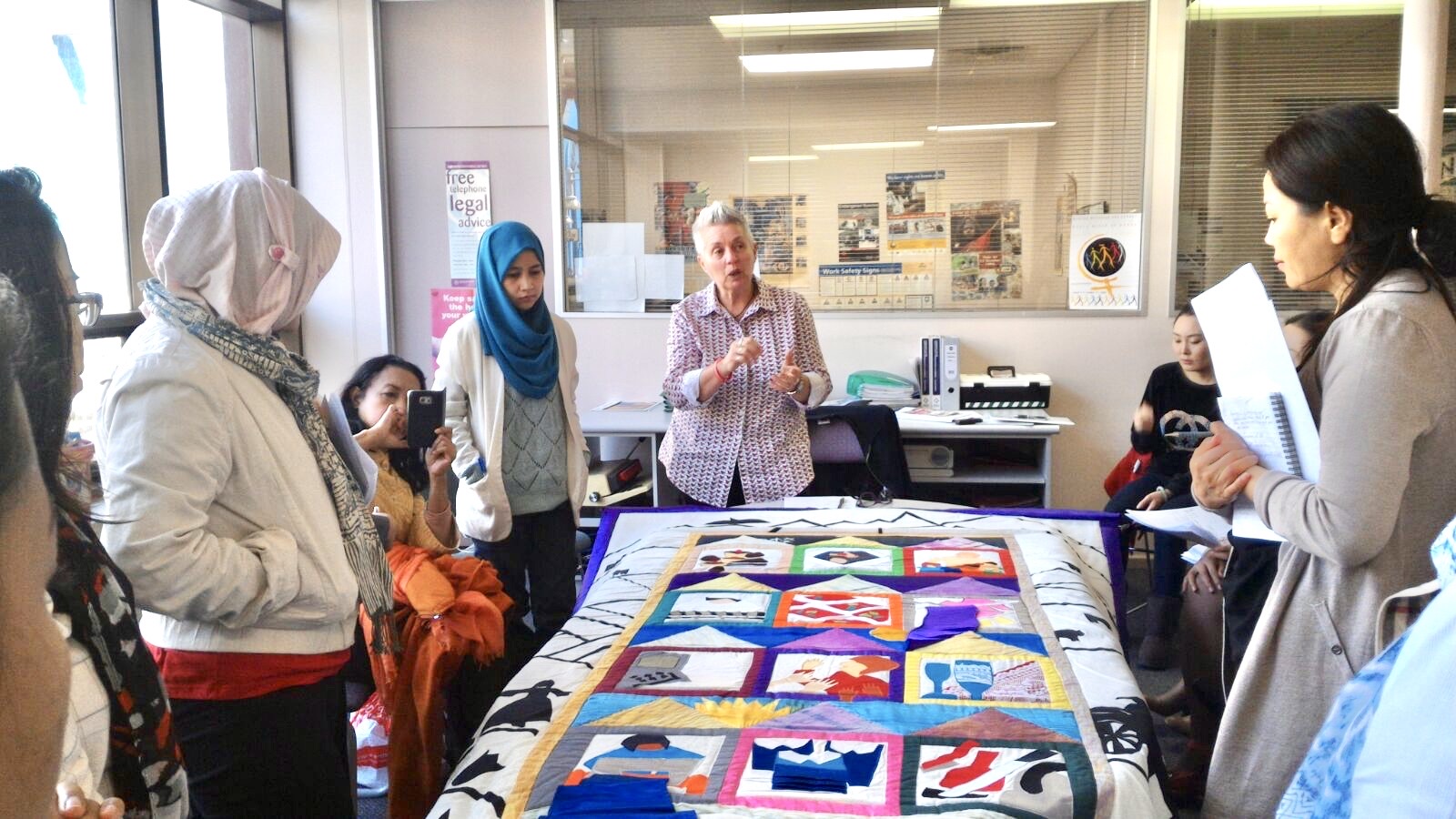
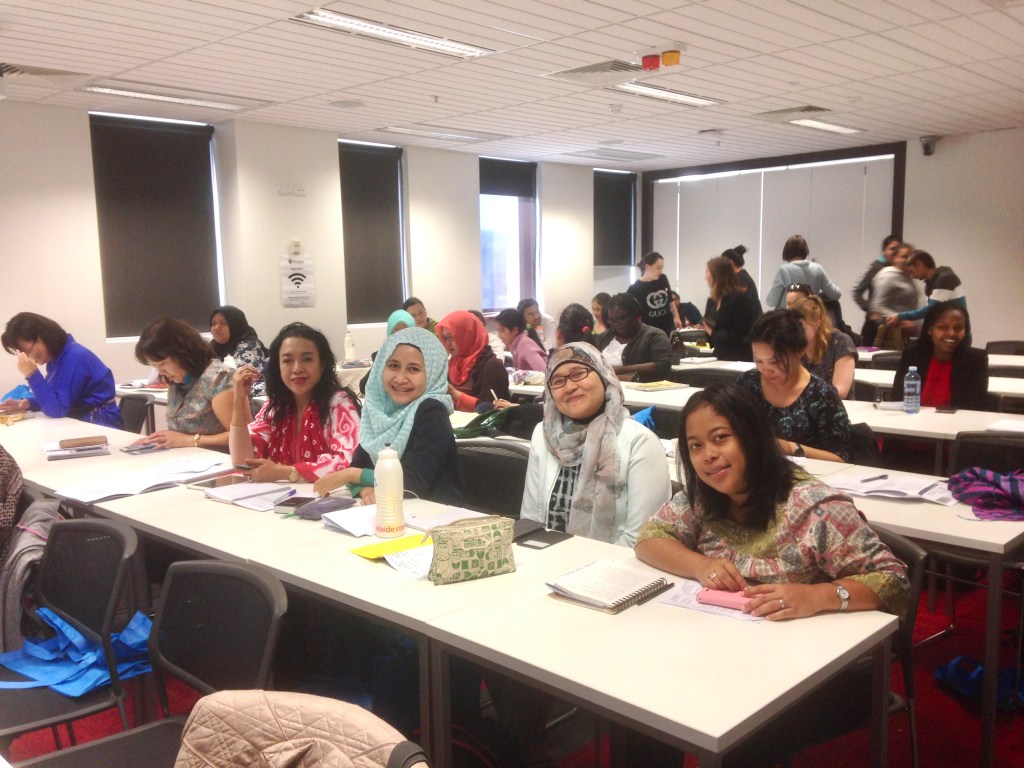
I wouldn’t say ‘how Australia changed me’ because I feel like I’m still myself, but the way I act was shifted because of my experience studying in the country. I studied at Flinders Uni in Adelaide and the Uni of Sydney in Sydney, but this time is more about my experience at Flinders because I spent more time there. The program was under the consortium of the Business and Gender Study Department, therefore, I visited a lot of businesses and studied them not only from the business side but also from the gender perspective.

My lessons and takeaways from Australia are numerous, but if I have to choose the top 3, it would be:

1. Learn from your biases. It was funny or quite ironic, because I started learning about gender when I was having a huge bias towards it. At the time, I was having a business team where I was the only woman, and there was quite a resistance to adding more women to the team. During the process of learning, I encountered unpleasant events and was forced to think more. Later on, I just realised that I was biased, so I learned it the hard way. But then, it also made me think about the other (potential) biases I have. I think it’s crucial to notice your personal biases in order to make a better decision and interact with other people.

2. The courage to speak. Perhaps it’s not only in Australia, but also in other Western countries (?), which is very different compared to Asian countries (?). Affected by my surroundings, I felt like I was always encouraged to speak. Ask questions, state your opinions, and dare to argue. It improved my confidence and English speaking skills significantly (I couldn’t stop talking). Now, every time I feel like I need to speak a certain language fluently (and more importantly, eloquently), I know I need a supportive environment. If there’s none, I have to create one.

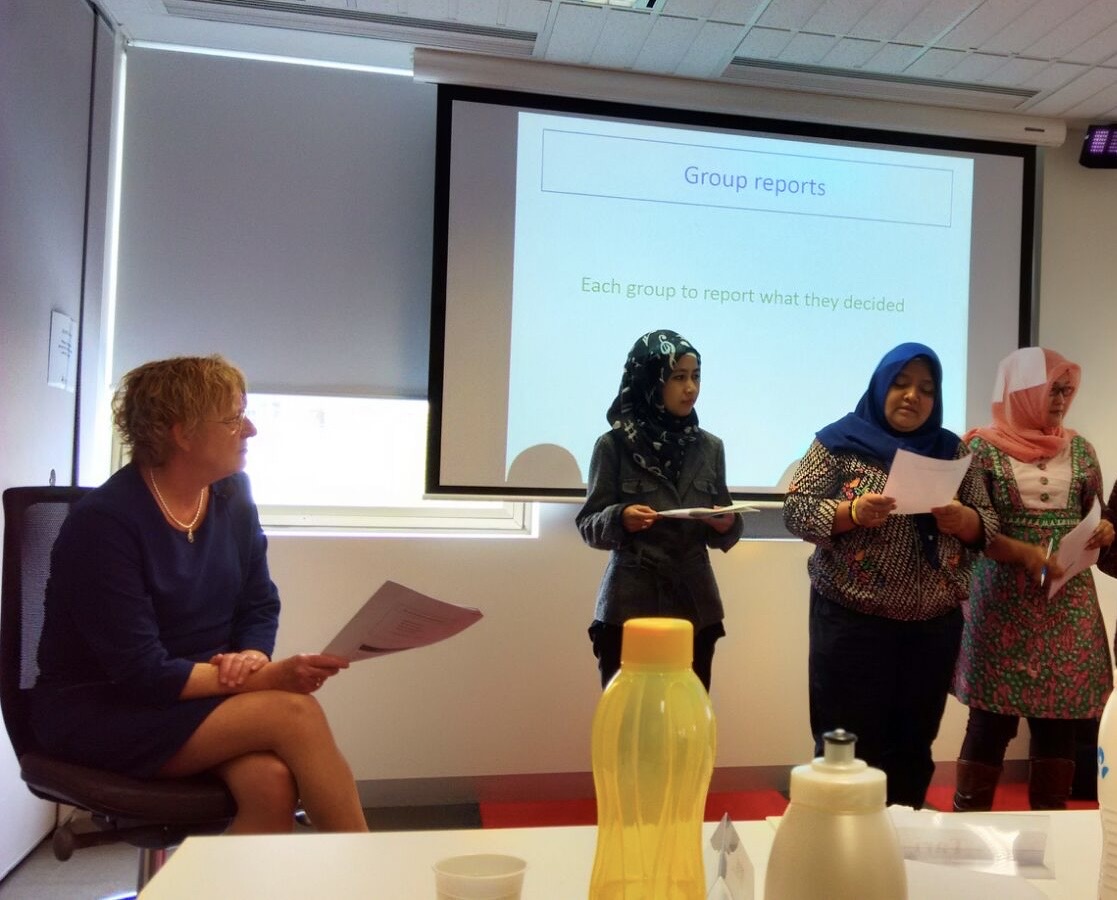
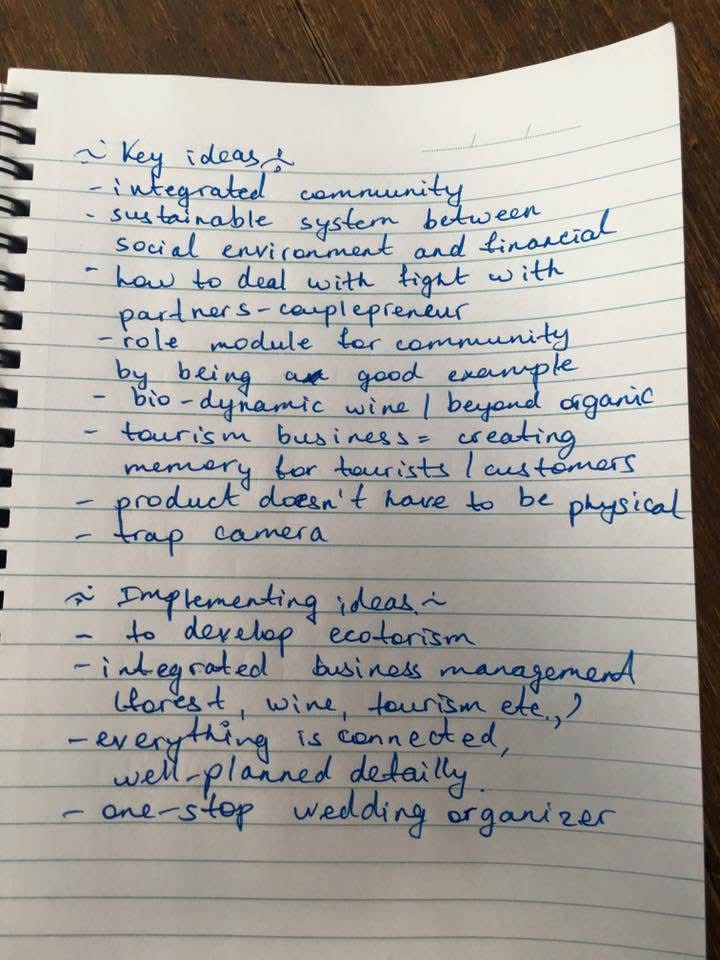
3. The retrospective method. When I was studying at Flinders, every time after we visited a business or attended a course, at the end of the day, we were asked to present three things: 1. key ideas, 2. what was new for us, and 3. how to implement. The first point (the key ideas) might be the same for all the students, because we heard the same thing. But for the second and the third, they must be different, because it depends on our personal experience and the relation between what we just learned and our work. For example: when we were visiting a winery, how to produce wine might be new knowledge for some students, but not for others. And then, some might think about implementing the business, but as for me, since wine is illegal in Islam, what I thought implementable was the concept of its sustainability. We always presented these three points to end the class, repeatedly, over and over again, until it became a norm. Now, every time after I read a book, attend a seminar, or talk with inspiring people, I try to use this method. I think and reflect, hmmm… (1) what are the key ideas? (2) which parts are new for me or the most interesting? and (3) how can I implement this knowledge or information? Shout out to Prof. Anuradha Mundkur and Cara Ellickson from Flinders, who introduced me to this method!

That’s what I can think of now. Perhaps I will share more in the future, which hopefully can be useful, at least for me, to organize my memory.

Jakarta, during the Friday prayer time, after attending a neuroscience masterclass the night before,

Hani

A Letter for My Future Kids

I always have thousands of thoughts in mind, some of which are concerns towards life, things that people may not want to hear, but I want to spit them out. And strangely, recently, if I can imagine talking this kind of stuff with someone, I expect it could be my kids.

First of all, sorry for not meeting you much earlier, as I’m not done yet with my life. If you’re really my kids, I believe you’ll understand. Everything happens at the right time, so don’t worry about the timeline.

Now, there are three things that I want to talk with you:

  1. There’s no fixed formula in life. People can say anything, but the truth is: nothing is absolutely right, even for the most common things. And that is what makes life interesting. Example:
  • So many people say: have kids as early as possible, so the age gap is not big, you can play with the kids like siblings, or whatever. As I grow older, I believe that there’s no better or worse of having kids early. My mother married when she was 17 and had kids right away. The financial condition was never been good, and her kids, including me, lived with many limitations. As I hit a productive age, my parents are still alive, which is a good thing, but on the other side, it made me a sandwich generation. I had to help my family, even pay for my sibling’s tuition, while keep struggling to fulfil my needs. I was busy, very busy just thinking about money. I don’t want it to happen to you. I’m building my passive income, so you don’t have to think about my daily needs as you grow up. But it takes time. So, there’s no right or wrong in terms of timeline. Let’s just live our lives as we can, ok?
  • I remember someone telling me to keep my dreams in silence, no need to tell anybody, because as you tell people, it can lower your persistence, as if you’ve achieved them. I used to believe it, until I discovered that telling people could increase our accountability, besides opening chances for people to help us. There’s no right or wrong in doing so, we just have to accept the consequences.
  • Fun fact: Since I realised this point, that there’s no formula in life, I reduced reading “self-help” or “self-improvement” books, as they became less and less interesting. I believe even the authors of such books are still trying to figure out life. The only thing you have to read and follow is Quran and hadist, and that’s more than enough.

2. The key to success = eliminating distraction. It sounds like a life formula, which contradicts the point above, but here I just want to share my story. I was born and lived in an interesting period, before and after the internet existed. Before the internet even sound, people who excel were the ones with the most information, and it was hard to get them. You had to go to the library, read piles of books just to find specific knowledge, had hardship finding a tutor, etc. So people were imagining, that if only the access to information were so open and easy to find, human resources would be developed faster, then the quality of our society would be excellent. Then voila! Internet boomed! Year after year, internet penetration is dominating, you can learn about literally anything, even accessing materials from the world’s top universities. But can I say the quality of Indonesian people become high? The fact is, the data shows otherwise, due to what most of our people consume, and they allow too many distractions involved. The world has shifted. So, now, it’s no longer about who has the most information, but who can eliminate most of the distractions. Social media, online games, and unnecessary information are your real enemies to any dreams you want to achieve.

3. Don’t let satan shift your principles. Youth social life is getting more and more out of control. I know it’s hard to avoid, but I hope you have the strength to live your life as our God advises. I remember when I was a teenager, it was weird seeing a girl wearing a hijab sitting next to a boy in a public space. It made me so uncomfortable. But then, as time went by, it became less and less strange, like kissing scenes in Indonesian movies, etc (FYI, the kissing scene in our movies used to be taboo!). That’s how satans work, they shift our perspective of what is common and not. Several days ago, I watched a video on YouTube, starring an Indonesian actor on a talk show, named Jef** Ni****, where he openly shared that he has slept with more than 20 women in life so far (which is disgusting). But what surprised me more was the comments on that video, where people defended the actor by saying “It’s better to be open rather than be a hypocrite!”. So stupid. Sexually active outside marriage and being a hypocrite are both sinful, so there’s no need to compare them and consider which one is still better. What makes it even more concerning is, that I just realised that many youths think the same, that “it’s better to be openly sinful rather than be a hypocrite”, including in our family. One of my nieces who has a boyfriend, when she was told to keep their attitude in public said “I just want to show who I am, not like your other niece who looks good in front of our family but does the same thing behind”–> another stupid argument. At least my other niece has a pudency, not like you! In the coming years, I believe this thing will be even harder for you, as the Quran said, so I just hope you can be stronger, and beat satan around, with God’s permission.

That’s it for now. I’ll write more to you, and hopefully we can talk someday. Thanks for reading.

Your overthinking mom,

Hani

I Want to Be a Standup Comedian

Yes, you read it right. I want to be a comic who makes jokes over anything and makes people laugh even though sometimes many of them feel offended.

Anyway, welcome to my daily rant. I’m practising a note a day to rebuild the writing muscles, and this is my first day, nyahahaa… Of all the topics I wish to share, this is the topic I choose first because I think I can finish writing this in one sitting.

So, why do I want to be a comic? Can you guess? No, definitely not because I think I’m funny. On the contrary, I feel I’m not funny at all. I’m serious most of the time unless I’m with people who can create the supportive nuance for me to make jokes. But there is someone who really inspires me to be a comic, the one and only: Adriano Qalbi.

As you might have known, Adri is a comic and a consistent podcaster with his “Podcast Awal Minggu”. Please check his content for those who don’t know him yet, and I bet you’ll be either his fan or his hater, nothing in between. He has some authenticity in his way of thinking and talking, and we have to admit that it’s not for everyone. By declaring himself as a comic, when he appears on your screen, you’ll anticipate funny stories and laughs, and it can be the case because Adri is also someone who can laugh easily. But the more you listen to him, the more you’ll realise that what he actually does is nagging about anything, complaining about all the things that happen in life, finding the antithesis of the most common perspectives, challenging the status quo and pushing out his argument (i hope i’m not exaggerating here, but you got my point, right?). But again, because he wraps all these with jokes, people see his nag differently, and that’s what I want. Not because I have so many things to complain about, but because many things in life bother me, and human actions are sometimes unbearable. As an extroverted person, I always feel the need to release my energy (sorry for using this excuse, but FYI, it’s true!), but I don’t know how to express it in a non-offensive way. The solution? Jokes! But for now, I know nothing about comedy besides knowing that it’s all about breaking the expectation. I’m sure humour can be learned because I learned some stuff from one of the conversations between Pandji and Adri in this video:

So, where should I start? Read, watch, practice, repeat. Timeline: unknown.

And if you’re curious about what in life bothers me, I’ll give you some little examples of what’s in my head:

  • Why do poor people choose to have more kids when they know that they can’t afford their living? Do we agree that most of them are considered less intelligent people?
  • Why do people put their partner’s name or their kid’s name in their profile bio? (e.g. Bio: love of @abangsayang or @Azka’s mother). Bio is to help other people to know you, your interest, your field, and how you identify yourself. If your identity depends on another person, what happens if that person is gone? Will you lose your identity? Or do you already think that you don’t have any other identity?
  • Graduating from a political school and working in politics doesn’t mean you have to talk about politics all the time. Don’t you read anything else outside your field? I found this kind of people boring. (It applies to any subject besides politics)
  • Another thing about so-called politicians or political practitioners is, that I don’t know how they can live their life, as anything they do will be considered political action, action with a motive and not a genuine attitude as a human being.
  • People who keep asking “when will you get married?” or “when do you want to have kids?” are people who are not entirely happy with their life, and seek a spark of joy from showing that they have something that the other person doesn’t. Not the kind of people I want to be surrounded with, absolutely. Or (if it’s a woman) it may be because the only talent she has is giving birth? Ha!

Do I sound offensive already? Sorry. Please be patient. I’ll learn comedy and come back funnier. Adios!

Between London and Jakarta,

After finishing the last meeting for today

Intro to Open Ownership

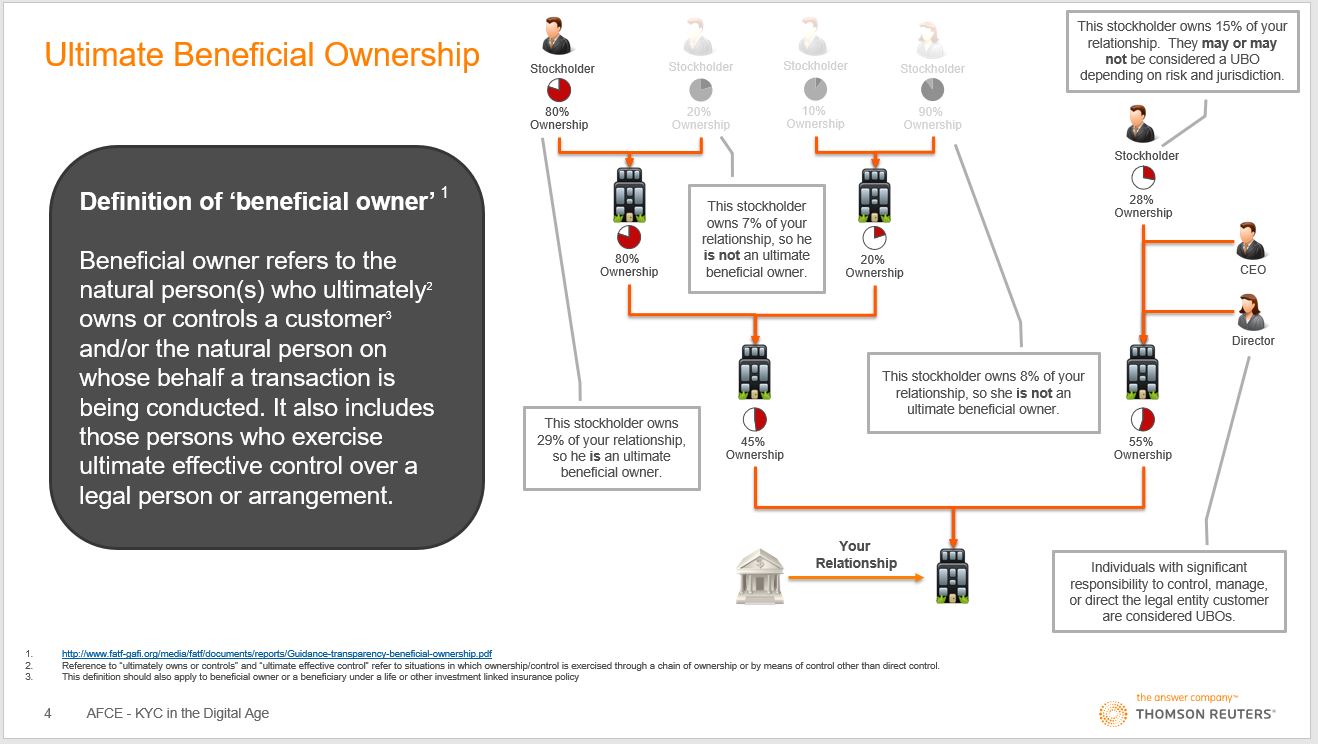
Source: https://www.legalexecutiveinstitute.com/infographic-beneficial-ownership-rule/

Based on the World Economic Forum’s Global Shapers Survey in the last consecutive years, three of top problems that we are facing are inequality, corruption, and conflict/segregation (incl. clash between races, religion and more massive scale war). Considering that, I always think transparency has an essential role if we want to fix them, because, in a macro perspective, one of the significant factors that cause all of those is that there are many hidden transactions by the stakeholders, not to mention money laundering and terrorism funding. Many countries have promoted transparency itself, and we can see the progress gradually. For example, in my country, Indonesia, where we try to implement the Open Contracting that enable the government to conduct fair and transparent tender and contract, it raises trust from private sectors to involve more again in the procurement process (based on data from opentender.net), hence the bids not monopolised by certain parties. To complement all the Open Data movements, this is where beneficial ownership of public access is urgently needed. After focusing on the government, getting a commitment from the leaders (proved by issued regulations), open data across corporations will guarantee its better and more efficient implementation. For the civil society, it brings the issue of connecting between BO (Beneficial Ownership) and PEPs (Politically exposed Persons), for the company, we can inform operational considerations, and for the government, especially for my re-elected president, it builds the political momentum. Consequently, updated BO will facilitate improvement in societal progress from many sides.

Best,

Hani Rosidaini

Probability Rate of Love

69796780_10214856261775686_3822159467647074304_n

Source: (instagram) Karya Adalah Doa


Today, Indonesia has a big lost. Our 3rd president has passed away, after been hospitalised for days. He was a real idol for anyone. He was a brilliant inventor, big tech initiator, a noble statesman, and inspirations across generations. And one of so many things that people adore: his love life. I guess each Indonesian knows how amazing he and his wife nurtured their loves toward each other, or “true love” that really one of a kind, they say.

Regarding this topic, I always imagine how someone can deeply in love with only one person for the whole life. Fact: most such couple come from the older generation. Another fact: they were born when tech was not as massive as today. So, is there a correlation?


HAS TECH USHERED IN A GOLDEN AGE OF LONG-DISTANCE DATING v2

Source: wired.com


Firstly, what kinda change exactly that tech brings to our life? For me: Choices/options. Or in statistic: bigger random sample. You’ll be part of global community, you can easily communicate with anybody, you can even update someone’s life without really talk to the person. I am sure many people haven’t decide to marry is also because they tend to think “I expect to find someone better out there”. As we know, paradox of choice; the more choices you have, the longer time you need to decide (and the less your happiness rate could be)”.

7fb4511a3bbbdd65a3c222ee5871f64c

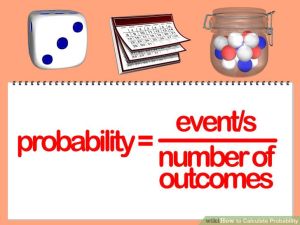
The less the events, the less the result


So does in matter of love. Well, I might be wrong, but as I’m married, that’s one principal that I’m trying to apply “Hani, no more big random sample (probability rate changed), you have no choice now but to love your spouse wholeheartedly, he’s the only one you have to devote your feeling, and that’s it”. It changed the game.

Yea, thats what I think so far. In brief, if you want to be better in relationship: beware of tech, keep making your choices limited. But don’t trust me anyway. Good statistician always say:

“Correlation does not imply causation”.

Lastly, rest in peace, eyang Habibie. Now you can gather with your loved one in eternity ❤


Jakarta 2019,

in the mid-day while ordering Grabfood for lunch


A Gift

Why in life you can’t choose your family?

Because they actually are a gift.

Sometimes in my hard times I didn’t even expect anyone could give hands and help me. But once family know, they always try and find a way to ease the burden. Then I just hope that I will never take them for granted anymore.

One Thing At A Time, Data Mining, and Kindle

IMG_5102

Ok, sorry for the photo


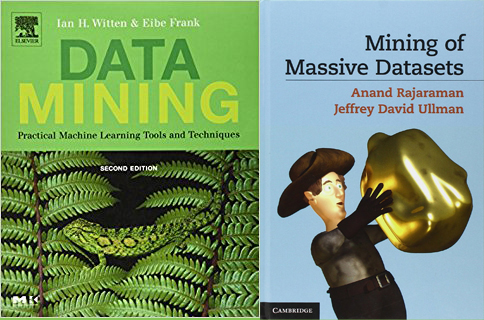
Guess what? I’m currently in the middle of my reading and choose to take a break just to write this post. I’m reading Data Mining – Practical Machine Learning Tools and Techniques (some people recommended this one, so I give it a try), written by the practitioners of WEKA, one of the powerful softwares to mine data, and I expect this book is really practical just like mentioned in its title. I spent several hours to reach half of this book (around 250 pages) and I think it’s pretty fast, because I was not skimming, but really reading it comprehensively. Why so? How could I do that?

Recently, I’m practicing to apply a method, that may be very common to all of you, but not everyone doing it: “One Thing At A Time” method. Started when a friend of mine telling me something about healthy eating behavior. She said that, if we have to choose between bathing and eating, what should be done first, it’s better for us to do bathing first and eating afterward. Why? Because when doing food digestion, our body needs to focus and not distracted by any other activities. She even said that, bad digestion can produce toxic. So when we eat, it’s not recommended to double the job by reading books, watching movies, checking social medias, stalking your ex-es, or so on. And I think it’s also relevant generally. People nowadays are crazily obsessed by multi-tasking, like we have to accomplish so many things at a time. The question is: is it really work? I personally think that it is a toxic (at least for me). Instead of being a benefit, it usually becomes a threat. When we’re doing jobs and keep moving from one to another, most likely we end up by not finishing them all well. Or worse, none of them is finished. Well, some people might say that they can deal with that, but me, even without distraction, my mind is often branched far off the topic, so it’s best to get rid of all unrelated stuff. And to make it more powerful, I even wrote the sentence in a big sheet of paper and put it on my wall: ONE THING AT A TIME. Whuff~

So, done with the method and back to the book. I finally chose to take a break because after finish half of it, I found that this book is veryyyyyyy…….. useless 😐 (I give the link below this post if you want to download the PDF and read it too). The authors waste my time by babbling about data mining application in different industries until page 90, which not necessary needed. And when they move into technical chapters, I found them not easy to understand, unless data mining is already in you (with that advanced statistics, complicated formula, and well programming skills), and you just read this book as a supplement. So, I think I will shift to another book: Mining of Massive Datasets, and decide whether this one is better or judge that these books are typical.

511pKebJTTL._SX258_BO1,204,203,200_

Lets see…


Talking about books, usually in weekdays I spend 1-2 hours for reading. But in the weekend like this, I can spend so many hours only for consuming words and extracting information from books, and now I’m starting to worry. Not because of the reading, but the medium. You know, of course I do love physical books. But since my reading is dominated by English books (which are not cheap to collect them all physically, and not all of them are provided in near places either), my books now are mostly in digital form, and I read them all through gadgets. We can imagine, even without reading books on a laptop, I spend my time staring at the screen for so long, for improving skills, coding, doing tasks, emailing, and other activities. And when I want to relax and doing what I love, which is reading, I still have to torture my eyes with shiny lights from LCD? Oh My….

So now I’m seriously considering about using Kindle. But because it is not officially sold in Indonesia, perhaps I have to find a way how to get it. Well, surely those local marketplaces are selling it, but, are there some issues to be concerned about? Or is it just okay to buy from the local seller with a higher price? Will there be any trouble with US credit card payment? Oh, please, for any of you who have experience, do share with me, I will be very appreciate it. Meanwhile, I’ll be using this laptop or smartphone and aching in tears when it takes too long. Huhuhu…

61shyF063PL._SL1000_

Craving for thisss!


In the mid-day, when all my eyes want to see are green leafs and prairie,

hope that I will never have to use reading glasses in my whole life


Download PDF:

Data Mining: Practical Machine Learning Tools and Techniques – Ian H. Witten & Eibe Frank

Mining of Massive Datasets – Anand Rajaraman & Jeffrey David Ullman

My Review of “The Clash of Civilizations” by Samuel Huntington


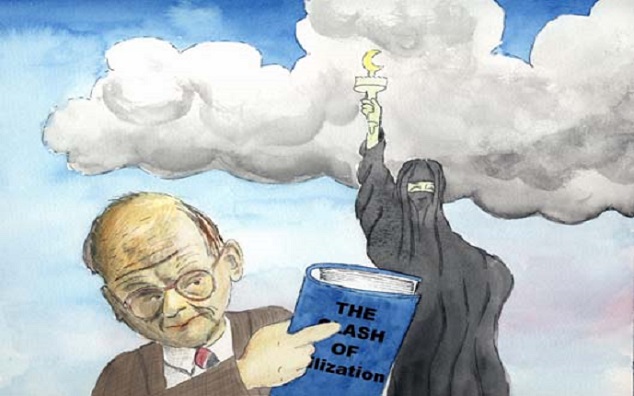
Well, sometimes we read a book simply because every body does. Just like me with this one. I read it because this article said that it’s one of books in the reading list of students in top campuses like Harvard, Columbia, Princeton, etc. So I gave Huntington a try.

This book tells about fundamental civilizations globally. Interestingly, by just reading this book, we can be more acknowledged with role of each nation in this world and how they affect each other (which make me also want to learn again about maps and upgrade my geographical skill!! Ha ha >,<).

By following the stories, we can observe that the fundamental source of conflict in this new world will not be primarily ideological or primarily economic. The great divisions among humankind and the dominating source of conflict will be cultural (region, ethnic group, religious groups, all have distinct cultures at different levels of cultural heterogeneity). Or as R.R.Palmer said, “The wars of kings were over, the wars of people had begun”. The next world war, if there is one, will be a war between civilizations.

“The West and The Rest”. This polarization are also emerging yet I don’t really support this. Our people should not be manipulated and utilized by certain purpose of irresponsible party. Remember what happen with Iraq. “The struggle against American aggression, greed, plans, and policies will be counted as jihad and anybody who is killed on that path is a martyr”. “This is a war”, King Hussein of Jordan argued, “against all Arabs and all Muslims and not against Iraq alone”. The question is.. “is that really true??”. Or… Just like Western leaders who claim they are acting on behalf of “the world community”, the very phrase that become a euphemism to give legitimacy to the actions of them.. Do you really think that is right?? Or with what happened in Indonesia.. when Ahok is suspected to do… well, never mind -.- (I don’t wanna talk about it).

We should think more clearly in seeing diversities around us and be a part of civilization that embrace all the differences with an objective and a good way. That’s the least what I learned from this piece of Huntington. Go read by yourself.

In the middle of (very) bad times,

and I’m reading book about conflicts, instead


(For other reviews: https://www.goodreads.com/haniwww)

Also read: Review of “Lean In” by Sheryl Sandberg

A Year-End Note: About Living

img_2375

My midnight doodle a long long time ago. But still relevant to depict my wired brain.

I start writing this exactly on new year’s eve, with firework explosions as the back sound and friends around me. Still don’t know what to write, yet I want to jot down something to remark tonight. I still don’t get why people outside love to celebrate the new year, besides we have to change the almanac and the way we mention the date we live in. Many movies must be screened on TV now, and many festive moments people are sharing on social media. But for me, I have nothing special in these minutes toward year-end.

So let me do reveal one thing for you;
Perhaps I’m still the same me, like I used to, like I always am. Oftentimes I think that I’m a kinda person who lives with “Peter Pan syndrome” (I name it myself) in life, like a kid who never wanna grow up, and just wanna stuck at a certain age. Maybe that is what makes me not so excited about welcoming a new year and feel bitter instead. For me, getting older means entering life with more demands, and I’m not really okay with that.

But I want to understand people. Maybe they feel joy for the new hopes of their plans, or simply for the free fireworks show and public entertainment. There must be some days we can treat differently anyway. Otherwise, humans just live the same boring days over and over again.

Fortunately, I leave 2016 not so desperately. At least, there are still remarkable things that happened throughout the year: I won a competition, traveled, had business trips abroad, and got a scholarship to a cool university. Even though if we look deeper, those things were all unexpected, or were not something I planned for. On contrary, for the things that I’ve planned, I got so different results. I’ve been facing uncountable problems in business, academic matters, basic habits, and personal life. And most of them got me frustrated, even until now. Coz even when you have only good deeds on people, conflicts are somehow inevitable. And yea, I’m still single (if you do care). Some men indeed approach me, but just like in a drama, I always fall to someone that I can’t have. I remember at the last time my heart was broken (not long ago), I asked a friend, “Am I not good enough?”.. and my friend answered, “No, Hani. It’s not about being bad or good enough. It’s about compatibility. If he can’t accept you, it simply because he doesn’t think that you’re compatible for him”. And that made any sense. But ahh.. let’s get rid of this topic. I can never do anything about it, so helpless. Just promise me you will pray for me, okay? To find someone “compatible”? Meanwhile, I’ll be just dating books, as usual.

However, in the end, I know that there are still things to be grateful for, especially related to the family. I still have my supportive parents and that’s even more than just “something”. If they’re still fine, then I should be just fine, others can follow. For many times I’m not really conscious of what I’m feeling and what I’m worried about. The single thing I know is, I’m still living.

While trying to regain my focus,

In the place where I always spend NYE since years ago… a mosque

Winning Australia Awards Twice And Becoming An Anomaly

alhamdulillah

Thank you, Australia!


Well, actually everything happened so fast, til I didn’t really aware what was coming over me. Just a week after I submitted my application (at the very last minutes of deadline) for Short Term Award Scholarship, I directly received an email that it was successful and I got selected to be an awardee of AAS (Australia Awards Scholarship) once again. HOoOoO o.O

For me personally, it proved one point, as written on my late post, that every time you were brave to take a step, even though you were not sure where it would led you to, it surely would take you somewhere, while hesitation to move would just bring you nowhere. I never expected that my decision for taking fellowship scholarship in Flinders Uni would give me so much benefits, even after the program ended. One of them is, I am already categorized as an alumni of Australian university, and by that, many opportunities opened. I was invited to join the alumni network, to attend the alumni events, to make connections among great people, etc, beside as an alumni, there is also a chance to apply for grant scheme to fund our business activities that making impact for people, and this, which just brought me here, to apply for a special scholarship for alumni.

I felt nothing to lose when I applied this special scholarship, remembered that I just came back from my fellowship in Adelaide months ago (9 months to be precise, not even a year, aight?) and the new scholarship I was applying titled “Transformational Business Leadership – for Outstanding Alumni of Australian Universities”, so that the awardees must be valued as outstanding persons, no? But what made me eager to apply was, the fact that the program would be run in the coolest uni in Australia, The University of Sydney (that Hogwarts look alike campus), and that we would study about economy/finance, subjects that urgently needed by me to run my business better. And perhaps, God had a plan for me, so TADAAAA… I got it, and here I am again, in the pre-departure workshop altogether with other fellows who will leave and study in Sydney later. And I’m becoming an anomaly.
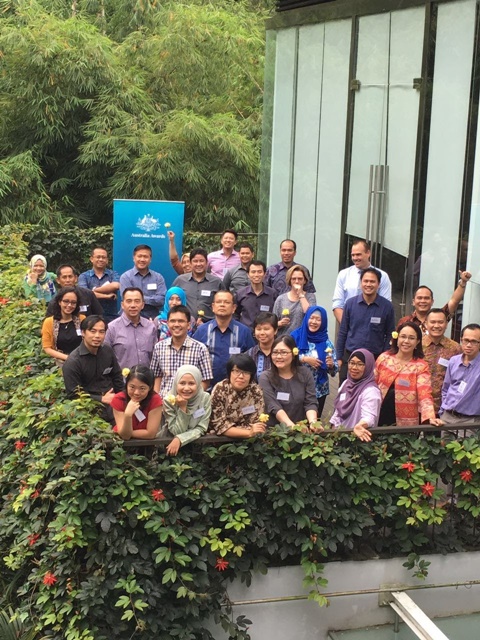
2

2nd day of the 3 days pre-departure workshop


Why I call myself an anomaly? Well… After flocked with other awardees, I found facts that:

  • Everyone in this group had graduated and got degree from various Australian uni long time ago. Some of them finished their bachelor in Oz, most of them got their master degree, and the rest even already got a Phd title from there. But me. I’m just a fellowship graduate by all means. Only me.
  • All the people here have crucial positions in their well-established companies, national and multi-national, senior managers and or directors who are averagely aged 40’s. But me. I’m the one and only still living in my 20’s and working in a relatively new venture. I’m the very youngest one and have no peers, literally.
  • Most of them have background in finance and or working in such field, but.. me again X))

Yea, but chill. Instead of feel alienated, I think that I’m privileged to be among them, to be given a chance to learn much from experienced people, and to do acceleration. Sometimes lonely, like “am I really belong here??”, but.. well, lets just take the bright side anyway.
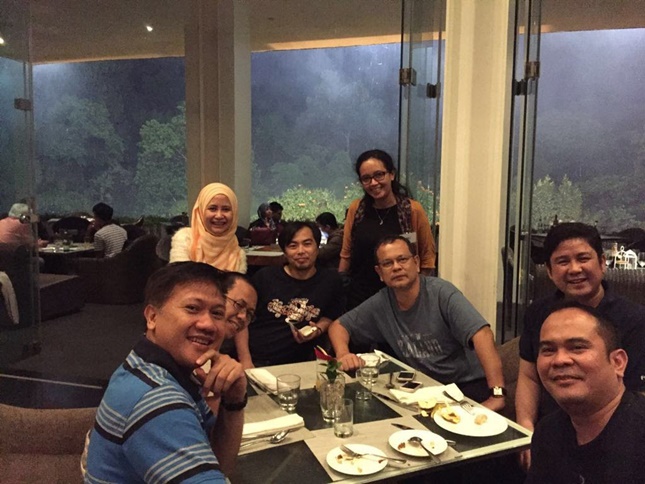
img-20160914-wa0036

funny how to call them (who aged as my father) class mates


So, as I noticed right after the workshop started, different from my previous AAS, where not all my class mates could speak English well, in this current group, I can see that everybody’s really smart and everybody has a very good English (otherwise, they wouldn’t graduated from Oz and become global business leaders, eh?). It makes the class and discussions so much alive. Anyone can participate and share their well thoughts and experiences. And it is very very exciting! We are assisted directly by one of the directors of Sydney Uni Business School, Prof.Robin Stonecash, and the program leader, the funny smart Kyle Arthars, sooo much fun!!
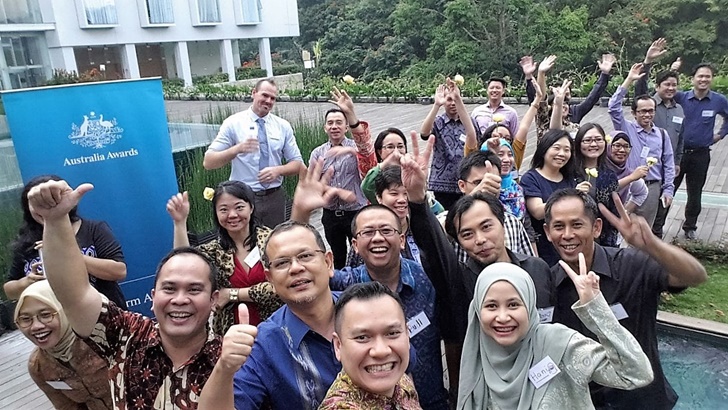
img-20160914-wa0027

Kyle is so tall so you can always notice him right away


So, for those who ask me whether this program is related or is the sequel of my previous AAS, no, it is not. It’s completely apart, yet given from the same scholarship provider, funded by the Australian government.

And so what I can share with you from winning the AAS twice are:

  • I think AAS are very concerned in making impacts of their programs. So (especially for the long-term awards), they look for candidates who can give influences or create changes. That’s why some people may say potential awardees mostly come from the government institutions, rather than who work in private company, because they are more likely to be the persons who have authorities to make policy or something that will affect to the society.
  • The rule above also somehow applied in short-term award. If you’re not a PNS or working for the government, for targeting the objective of making impact, it’s good for you to have an important role in your company or institution, because in common perspective, if you do so, as you educated, there are not only you who will be benefited, but also (directly and indirectly) your environment and people in surrounding.

    Based on these two, my tip is: when you apply, tell them clearly about your role, and show them how influencing you are.

  • Another hint from me; Australia has special concern in particular subjects, such as women empowerment/gender equality, people with disabilities, and development in rural areas. So if you want to biggen your chance in winning their scholarship, you can tell them how you involve in those issues. If you are a disabled person, I strongly recommend you to apply, because instead of be ignored, you are more likely to be prioritized. I can guarantee that. (And don’t worry, Australian environment is adequately inclusive)
  • Become an alumni of Australian Uni will bring you so many advantages, so that you should not miss the chance to be a part of it. Moreover, when this post published, AAS do even have (very) short courses that only take 2 weeks.
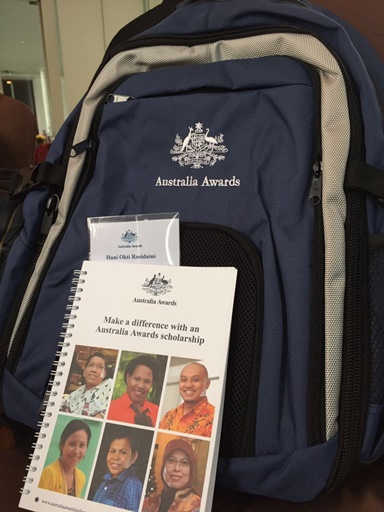
img-20160913-wa0009

my bag is ready


And what make the short-term award special:

  • We don’t have to provide any certificate of English proficiency (maybe it can help, but not compulsory). They asses fully based on our CV, applications, and essays.
  • They will help to make our student visa. In my case, I give them the data, and the AAS officer proceed it to the embassy.
  • The stipend and facility are a bit higher compared to for the long-term awards
  • Most likely, you will be gathered with leaders of the industry.
  • To maximize the output, the program must be including business visits, networking events, and social programs for you to experience Australia way more.

So, what are you waiting for? For Indonesian, you can check to australiaawardsindonesia.org for looking for suitable program for you. Meanwhile, I’ll be finishing my pre-departure workshop and preparing for my next journey in Sydney very very soon. Wish me luck, guys!!


In the cold un-air conditioned hotel room,

still absorbing today’s material and trying to fit in these grown-up people